
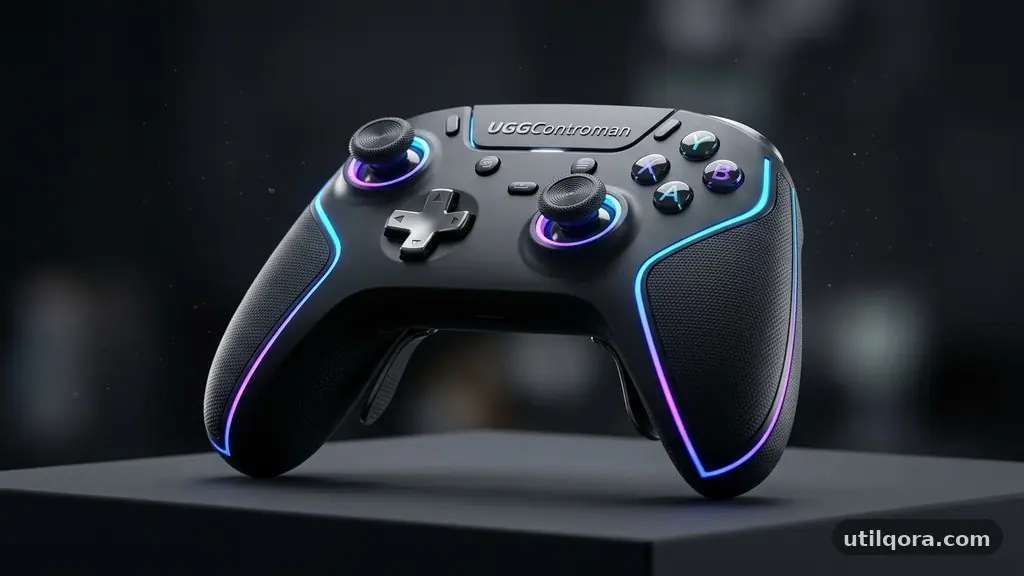
The Under Growth Games UGGControman Controller appears to be a gamepad associated with Under Growth Games, but publicly verified information about its exact specifications is limited. That makes careful checking more important than relying on unconfirmed listings or copied product descriptions.
Its practical value depends on details such as button mapping, analog-stick behaviour, connection type, and device compatibility. This article separates confirmed principles from points that should be checked on the box, seller page, or official support channel before you buy or connect the UGGControman controller.
What the UGGControman Controller Is Known For
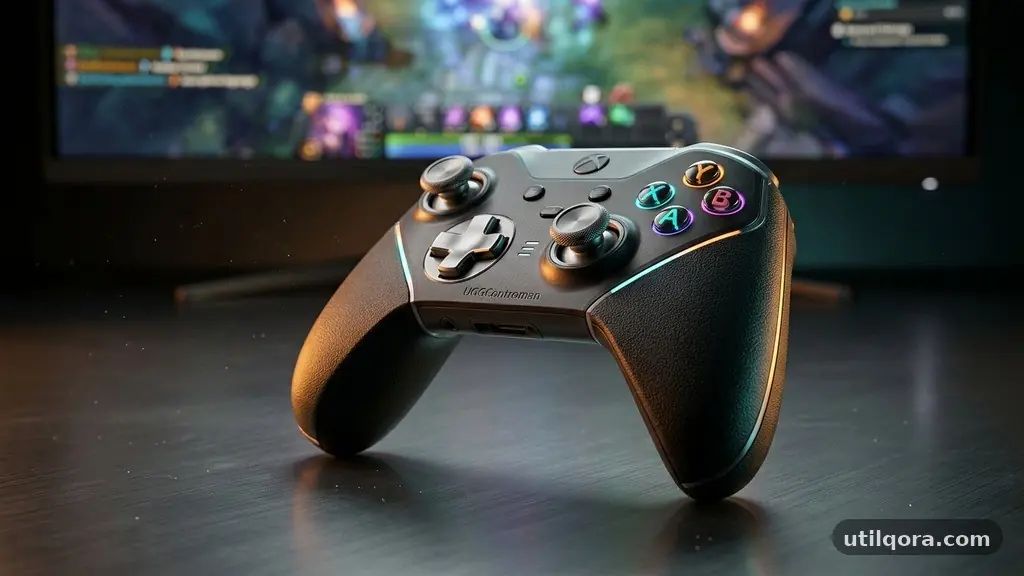
The UGGControman controller is best approached as a gamepad intended to give players physical controls instead of relying entirely on a touchscreen or keyboard. The name connects it with Under Growth Games, yet a widely documented technical specification sheet does not appear to be available from a major hardware database or established gaming publication.
That distinction matters. A product page may show the controller’s appearance, but a photograph alone cannot confirm whether it supports wireless connectivity, USB connectivity, vibration, motion controls, or a particular operating system.
The safest early verdict is therefore straightforward: the controller’s exact feature set must be verified from the specific unit or seller documentation. Different batches, regional listings, or similarly named accessories can create confusion, especially when a product is sold through a small marketplace rather than a large electronics retailer.
Players should look for a model number, connection instructions, supported operating systems, and an included cable. If those details are absent, treat claims about PC gaming, Android compatibility, or iOS compatibility as unconfirmed rather than assumed.
That does not make the device unusable. It simply changes the buying process from trusting a headline to checking the functions that affect real play: how inputs register, how the game recognises the pad, and whether the controller stays connected.
Controller Features to Check First
A familiar layout usually includes two analog sticks, a D-pad, four face buttons, shoulder buttons, and trigger buttons. Those controls cover most racing, platform, action, and emulation-style games, but the layout alone does not reveal whether the sticks are digital or analog, whether triggers have variable travel, or whether buttons can be reassigned.
Analog sticks are especially important for movement and camera control. A good stick should return toward its centre without excessive drift, while a poorly calibrated one may make a character walk, a menu move, or a camera turn without the player touching it.
The D-pad often matters more in fighting games, retro titles, menus, and platformers than casual players expect. A cross-shaped pad that produces diagonal inputs too easily can feel frustrating, while a stiff pad may reduce accuracy during repeated directional commands.
Trigger buttons serve different purposes depending on the game. In a racing title, variable trigger pressure can control acceleration, but some inexpensive gamepads treat the trigger as a simple on-or-off switch, which limits fine control.
- Button layout: check the position and labels of face, shoulder, and menu buttons.
- Analog input: test stick centring, range of movement, and possible drift.
- Trigger behaviour: confirm whether the triggers are analog or digital.
- Connection method: identify whether the unit uses a cable, Bluetooth, a receiver, or more than one option.
- Power requirements: check for batteries, charging time, and whether the controller works while charging.
- Configuration: find out whether button mapping is available through the game or a companion utility.
Do not assume that a low price means every feature is missing, or that a modern-looking shell guarantees advanced functions. The useful question is whether the specific feature supports the games you actually play.
How Gameplay Control Feels in Practice
Gameplay control comes from more than the number of buttons. It depends on input latency, stick sensitivity, button travel, trigger resistance, grip shape, and whether the game interprets the controller as an ordinary gamepad.
For a platform game, the first test is directional precision. Move left and right slowly, tap the D-pad in quick succession, and check whether a character responds once per press rather than repeating unexpectedly.
Action games place greater demands on camera movement and simultaneous inputs. Players may need to move with one analog stick, aim with the other, press a trigger, and use a shoulder button without the controller shifting in their hands.
Racing games reveal trigger quality quickly. If acceleration jumps straight from zero to full power, the UGGControman controller may still work for arcade racers, but it may feel less suitable for driving simulations that depend on gradual throttle and braking.
Button mapping can improve comfort when a game supports it. A player might move a frequently used action from a face button to a shoulder button, but remapping is controlled by the game, the operating system, or companion software—not automatically by the physical controller.
Latency is also easy to misunderstand. A wireless connection may feel responsive on one phone and less consistent on another because of radio interference, battery level, background activity, or the game’s own input handling.
| Control area | What to test | Why it matters |
|---|---|---|
| Analog sticks | Centre position, smooth movement, dead-zone response | Affects aiming, camera control, and character movement |
| D-pad | Single presses, diagonals, repeated directions | Important for platformers, menus, and retro games |
| Face buttons | Travel, rebound, simultaneous presses | Shapes comfort during repeated actions |
| Trigger buttons | Range, resistance, and digital or analog operation | Influences racing, shooting, and control-heavy games |
| Connection | Recognition time, dropouts, and wake-up behaviour | Determines whether play remains dependable |
Device Compatibility and Connection Types
Device compatibility should be confirmed one platform at a time. A controller that works on a Windows computer may not work on an iPhone, and a pad recognised by Android may still fail inside a particular game because that game does not support external controllers.
For PC gaming, USB connectivity is often the simplest starting point. A wired connection can reduce pairing steps and may allow the computer to identify the device immediately, although the controller still needs the right input mode and the game may expect a specific button standard.
Wireless connectivity introduces convenience but also more variables. The UGGControman controller may require pairing, a receiver, a mode button, or a particular start-up sequence, and those instructions should come from the product documentation rather than from a generic controller tutorial.
Android compatibility is often broad but not universal. Android phones and tablets vary in software versions, manufacturer settings, Bluetooth behaviour, and USB support, so a controller can connect successfully while a particular game ignores its inputs.
iOS compatibility deserves extra caution. Apple devices can accept supported game controllers, but the operating system and the game both play a role, and older accessories may not meet the requirements of newer devices.
The official Android game controller documentation explains how games receive controller input and why support at the operating-system level does not guarantee identical behaviour in every title.
Before buying, record the exact device model, operating-system version, connector type, and intended game. “Works with mobile” is too vague to replace those four checks.
Setting Up the Controller on PC
Begin with a physical inspection. Check the cable, USB plug, wireless receiver if supplied, battery compartment, indicator lights, and any mode or pairing button before installing software or changing settings.
For a wired setup, connect the controller directly to the computer rather than through an unpowered hub. Wait for the operating system to recognise it, then open the game’s input settings and look for a controller or gamepad option.
If the computer shows no response, test another USB port and inspect whether the cable carries data rather than power only. A charging-only cable can make a controller appear inactive even when the hardware itself is functioning.
Wireless setup normally involves putting the gamepad into pairing mode and selecting it from the computer’s Bluetooth menu. Keep the controller close during the first pairing attempt, charge it first if it has a battery, and remove duplicate entries if the computer repeatedly connects to an old profile.
Some PC games display Xbox-style prompts even when a different controller is connected. That is not necessarily a fault, but the on-screen A, B, X, and Y labels may not match the markings on the physical pad.
Test the controller outside the game before troubleshooting the game itself. A system-level input tester can show whether each button, stick, and trigger is producing a signal, which separates a hardware problem from a title-specific configuration issue.
Once the device works, save the game’s control profile if that option exists. A custom layout can be useful, but write down the original arrangement first so you can restore it after experimenting with button mapping.
Using It with Android and iOS
Mobile setup begins with compatibility rather than pairing. Confirm that the phone or tablet supports the controller’s connection type, then check whether the game lists external gamepad support in its description, settings, or help documentation.
For Android, Bluetooth pairing is usually selected from the device’s connection settings. If the controller has several modes, the correct mode may be labelled for Android, HID, or a general gamepad profile, but the exact labels depend on the manufacturer.
A wired Android connection may require an adapter and enough power from the phone. Some devices ask for permission to use a USB accessory, while others may not provide enough power for a controller with lights or vibration.
On iOS, pairing should be performed through the device’s Bluetooth settings rather than through the game first. If the game does not respond after pairing, close and reopen it, then check whether controller support is enabled inside the game.
Mobile games often use different control systems. One title may automatically assign movement and actions, another may offer a complete button-mapping screen, and a third may accept only selected controllers with a recognised input profile.
Touch controls can also remain visible after a gamepad is connected. That may indicate partial support rather than a hardware failure, particularly if movement works but menus or certain actions do not.
Keep the phone’s operating system updated, but do not assume an update will add support for an unverified controller. Compatibility is a partnership between the hardware, operating system, and game software.
Troubleshooting Common Problems
The most common failure is a controller that powers on but is not recognised. Start by checking the connection mode, charge level, cable, receiver, and pairing list instead of repeatedly pressing buttons at random.
If the UGGControman controller connects and then disconnects, move it closer to the device and reduce nearby wireless interference. On a computer, disconnect unused Bluetooth accessories temporarily; on a phone, make sure battery-saving settings are not restricting the game.
Stick drift requires a different response from pairing trouble. Confirm the problem in a system input tester, then check whether the game offers a dead-zone adjustment; if the centre value changes while the stick is untouched, the hardware may need service or replacement.
When buttons appear swapped, inspect the input mode before concluding that the controller is defective. Some pads can operate in different standards, and a game may show prompts for one layout while receiving another.
Unresponsive triggers can result from either software or hardware. Test them outside the game, then compare their behaviour with the controller’s documentation, because a digital trigger will not produce the gradual input expected by a title designed for analog pressure.
Firmware updates should be handled carefully. Only use a file supplied for the exact model, and do not interrupt power during the update; an incorrect utility can leave a controller unusable.
- Reconnect the controller and confirm the correct mode.
- Test it with another cable, port, or device.
- Remove the old wireless pairing and pair again.
- Check the game’s controller and button-mapping settings.
- Test every control outside the game.
- Contact the seller if the unit fails across multiple devices.
Keep notes about what you tested. A clear record of the device, connection type, game, and failed control makes a support request far more useful.
Is It Suitable for Different Types of Games?
The controller’s usefulness depends on the genre. Platformers generally benefit from a reliable D-pad and responsive face buttons, while third-person action games place more weight on the analog sticks, shoulder buttons, and camera control.
Arcade racing games can work well with a simple pad because their steering and acceleration systems are forgiving. Simulation racers may demand analog triggers, precise stick calibration, and a layout that remains comfortable during long sessions.
Fighting games are unusually sensitive to D-pad construction. Some players prefer a firm, sharply defined pad for quarter-circle motions, while others prefer analog sticks; no specification sheet can replace trying the actual control surface.
Turn-based strategy and role-playing games may place less pressure on latency. In those cases, comfortable menus, dependable button registration, and easy device switching can matter more than advanced trigger technology.
First-person shooters require careful testing. A controller can be technically compatible yet feel unsuitable if the analog sticks have a large dead zone, inconsistent sensitivity, or unwanted drift during aiming.
Local multiplayer is another practical consideration. If the Under Growth Games UGGControman Controller is intended for shared play, confirm that the computer or console can recognise multiple gamepads at once and that the game supports the desired player count.
Choose based on the games you play most. A controller that performs acceptably across several casual genres may still be the wrong tool for a competitive title where tiny input differences affect the result.
Buying, Care, and Value Considerations
Because public information about the UGGControman controller is limited, the seller’s return policy is part of the product’s value. A short return window creates risk if you cannot test device compatibility before purchase.
Ask for the exact model number, supported platforms, connection method, included accessories, and warranty terms. A seller who cannot answer basic questions should not be treated as proof that the controller supports every phone and computer.
Inspect listing photographs for practical clues. A visible USB port does not prove USB data support, and a Bluetooth symbol does not prove compatibility with iOS, Android, Windows, or a particular game.
Care is simple but worthwhile. Keep drinks away from the controller, avoid pulling the cable at an angle, store wireless receivers safely, and clean around the analog sticks with a dry method approved for electronics.
Battery-powered models should not be stored completely discharged for long periods. If the controller uses replaceable batteries, remove them during extended storage to reduce the chance of leakage.
Value should be judged by reliable use rather than the number of advertised features. A modest gamepad that connects every time and has a comfortable layout may serve a player better than a feature-heavy model with unclear support.
For an uncertain product, buy from a seller that provides clear specifications and an easy return process. That approach protects you from discovering only after delivery that the controller uses the wrong connection standard or lacks support for your main game.
Questions Players Commonly Ask
Does the UGGControman controller work with every PC game?
No. PC recognition does not guarantee support in every game. The title must accept gamepad input, and some games may require a particular controller mode, a manual configuration, or third-party mapping software.
Can it connect to Android phones?
Android compatibility should be verified for the exact model. Pairing may work at the operating-system level while a particular game ignores the controller, so check both the phone’s connection behaviour and the game’s input settings.
Does it support iOS?
Do not assume iOS compatibility from Bluetooth alone. The controller needs an input profile accepted by the device, and the game must also support external controllers; the seller or manufacturer should identify supported iPhone and iPad versions.
What should I do if the analog stick drifts?
Test the stick outside the game first. If the input moves while the stick is untouched, try an available dead-zone setting, but persistent drift usually points to a hardware issue that may require a return or replacement.
Can I remap its buttons?
Possibly, but the answer depends on the game, operating system, and controller mode. Look for an in-game mapping menu first, then check whether the operating system or an approved utility offers additional configuration.
Making a Sensible Decision
The Under Growth Games UGGControman Controller can be considered a practical gamepad only after its model-specific controls and connection method are confirmed. Focus on the features that affect your games directly: stable pairing, accurate analog sticks, a usable D-pad, responsive trigger buttons, and clear device compatibility.
Before purchasing, verify the platform list, test the controller promptly, and keep the receipt or order record. If the unit behaves well on your main device and the layout suits your favourite games, it may be a useful addition; if key specifications remain unknown, choose the option with clearer documentation and stronger return protection.