
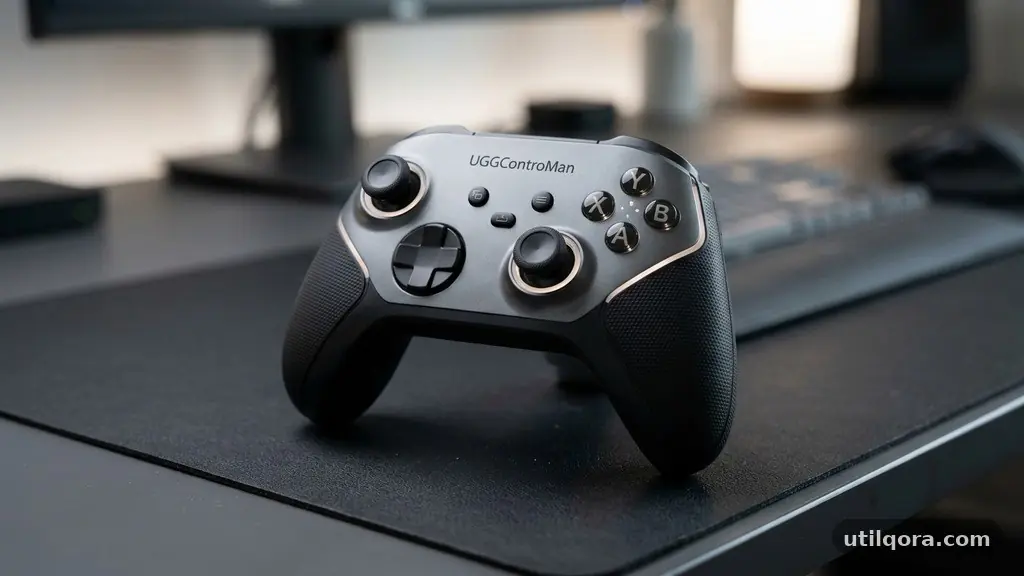
For players researching the UGGControMan Controller From Undergrowth Games, the central issue is simple: publicly verifiable information about the device, its software, and its supported platforms is limited. That makes careful setup more useful than confident-sounding specifications that cannot be checked.
UGGControMan may refer to a game controller, a controller utility, or a project connected with Undergrowth Games, so buyers should confirm the exact product identity before downloading software or changing system settings. The practical advice below focuses on safe connection, configuration, compatibility checks, troubleshooting, and ways to verify whether a controller is working properly.
What Is UGGControMan?
At present, there is no widely documented public specification sheet that clearly establishes the UGGControMan Controller From Undergrowth Games as a mainstream hardware model. Major controller databases, platform support pages, and established gaming retailers do not provide enough consistent information to confirm details such as its release date, price, button layout, wireless standard, or official software package.
That does not prove the project is unusable or illegitimate. It means users should treat names, download pages, screenshots, and compatibility claims carefully until they can be matched with a reliable source supplied by Undergrowth Games or the device manufacturer.
The name UGGControMan could describe a physical gamepad, a small controller configuration software package, or an internal tool associated with a game. Those possibilities have different setup requirements. A physical USB controller needs driver and input testing, while a remapping utility may need permission to read or translate button signals.
Before installing anything, identify what you actually have. Check the product label, packaging, purchase listing, readme file, or the exact filename supplied with the device. A vague reference to “UGGControMan controller software” is not enough to establish that a download is official.
There is also a difference between a controller being detected and a controller being fully supported. Windows might recognise a USB device but assign the wrong layout, fail to detect analogue movement, or expose it through an input standard that a particular game does not accept.
What Can Be Confirmed Before Setup?
The safest starting point is evidence gathered from the device itself. Record the model name, hardware revision, connection type, operating system, and any identification printed on the back or underside. If the controller has a serial label, keep a photograph of it for future support requests.
Do not assume that the word “controller” means the unit supports every console or PC. Some gamepads are designed only for Windows, while others support Android, macOS, Steam Deck, consoles, or browser-based games through separate modes.
A short pre-installation check can prevent most avoidable problems:
- Confirm whether the connection is wired USB, Bluetooth, or a proprietary wireless receiver.
- Check the required operating system and whether a driver is supplied.
- Look for an official Undergrowth Games page, support document, or release note.
- Scan downloaded files before opening them, especially executable configuration tools.
- Write down the original button layout before applying gamepad mapping.
- Test the controller in Windows before changing settings inside Steam or a game.
File provenance matters. A third-party download labelled “UGGControMan driver” may be outdated, modified, or unrelated to the product. If the only available file comes from an unknown file-hosting page, avoid entering administrator credentials or disabling security software merely to make it run.
Windows users can begin with the operating system’s built-in game controller panel. Press the Windows key, search for “USB game controllers,” open the relevant control panel, select the device, and choose its properties. The exact menu wording can vary by Windows version, but the goal is the same: confirm that button presses and analogue axes produce a response before launching a game.
Connecting the Controller to Windows
A wired USB connection is usually the clearest first test because it removes battery, Bluetooth pairing, and wireless receiver problems. Connect the controller directly to the computer rather than through an unpowered hub, then wait for Windows to identify it.
If the device appears with a generic name, that is not automatically a fault. Many gamepads use standard USB input descriptors and show a manufacturer-neutral label. The important question is whether the buttons, triggers, directional pad, and sticks produce the correct signals.
Windows compatibility depends on how the controller presents its input. Some games expect XInput, the interface commonly associated with Xbox-style controllers, while older titles may work with DirectInput. A controller can function in one mode and fail in the other.
Microsoft’s official XInput documentation explains the interface and its controller capabilities. It is useful when a game recognises a device but displays the wrong prompts or ignores specific controls.
Some controllers include a mode switch that changes between XInput and DirectInput. Others use a button combination at startup, a configuration utility, or a small physical selector. Do not guess the combination repeatedly, because a mode change can alter the device name and invalidate an existing controller profile.
Use this order for a first connection:
- Connect the controller with no game running.
- Wait for Windows to finish installing or identifying the device.
- Open the controller properties panel and test every input.
- Note whether the device reports an XInput-style or DirectInput-style layout.
- Launch one game and check its native controller settings.
If the game still fails to see the controller, close the game completely before trying a different mode. Many titles detect input devices only during startup, so changing a connection while the game is open may have no effect until the next launch.
Using Configuration Software Safely
Controller configuration software can provide useful functions such as button remapping, sensitivity changes, dead-zone adjustment, vibration control, and saved controller profiles. Its value depends on whether it communicates directly with the device or simply translates input through a virtual controller.
A direct configuration tool changes settings stored in the controller or driver. A translation utility can make a DirectInput device appear as XInput, but it may also create duplicate inputs if the original controller remains visible to the game. That problem is common when both a physical device and a virtual gamepad are active.
Install only software that comes from a source you can verify. Check the publisher name, file properties, version number, and release date. If the program asks to disable antivirus protection, install an unrelated browser extension, or provide sensitive account details, stop and find another support route.
Useful configuration features
Button remapping is helpful when a game places an important action in an uncomfortable position or when a player needs a more accessible layout. Save the original arrangement first, then change one control at a time so any unwanted result is easy to reverse.
Joystick calibration corrects inaccurate centre positions and inconsistent movement ranges. Calibration cannot repair a physically damaged stick, but it can account for minor variance between the neutral position reported by the hardware and the range expected by Windows.
Controller profiles are useful for switching between genres. A racing profile might assign sensitive trigger control and a larger steering dead zone, while a platform game profile might prioritise precise directional input. Label profiles by game rather than by vague names such as “new setup.”
Keep changes conservative. A very small dead zone can cause unwanted movement, while an excessive dead zone makes a stick feel slow and unresponsive. If the utility offers a test screen, watch the axis indicator while the stick is untouched; movement at rest is a sign that calibration or hardware inspection is needed.
Gamepad Mapping and Steam Settings
Steam adds another layer between the controller and the game. Its input system can interpret a physical gamepad, apply a community layout, and send a translated signal to the title. This is convenient, but it can make diagnosis harder if the game receives both Steam Input and a separate remapping utility.
Start with the game’s own controller options when possible. Native support usually provides the most accurate button prompts, trigger behaviour, rumble response, and menu navigation. If the title does not detect UGGControMan, then test Steam Input rather than enabling every available translation tool at once.
For a clean comparison, use two separate tests. First, launch the game with external remapping software closed and Steam Input set to its default behaviour.
Next, try one Steam controller layout and compare the result. This identifies whether the problem comes from the game, Windows, Steam, or the third-party utility.
Steam’s controller settings may display a generic name even when the physical device carries a different label. That is not necessarily a compatibility failure. Look at the input test screen and verify the actual controls rather than relying only on the displayed product name.
| Input route | Best use | Common limitation |
|---|---|---|
| Native game support | Games that directly recognise the controller | May require a specific XInput or DirectInput mode |
| Steam Input | Games with weak or missing controller support | Can alter prompts or create duplicate input paths |
| External remapping utility | Custom layouts and accessibility adjustments | May need background access and careful profile management |
| DirectInput mode | Older PC games and software expecting legacy gamepads | Button labels and analogue triggers may be interpreted differently |
| XInput mode | Modern Windows games using Xbox-style controller detection | Some older titles may not recognise it correctly |
Change only one input layer at a time. If Steam Input, a Windows remapper, and the game’s built-in mapping are all active, an instruction such as “press A” may pass through several translations before reaching the title.
Common Problems and Practical Fixes
The most frequent issue is that Windows does not detect the controller at all. Try another USB port, remove any hub, inspect the cable for damage, and test the device on a second computer if one is available. If it fails on multiple systems, the problem is more likely hardware-related than a game setting.
A controller that appears in Windows but does nothing inside a game may be using the wrong input standard. Check whether the title expects XInput or DirectInput, then select the appropriate device mode if the hardware supports one.
Wrong button prompts usually indicate a layout mismatch rather than a dead button. A game may show Xbox-style letters while the physical controller uses different printed symbols, or Steam Input may be translating the signals into a layout that does not match the on-screen instructions.
Symptoms and likely causes
- No device listed: cable, USB port, driver, receiver, or hardware fault.
- Only some buttons work: incorrect mode, incomplete mapping, or a damaged switch.
- Stick moves by itself: calibration drift, an overly small dead zone, or wear.
- Game sees duplicate presses: physical and virtual controllers are both active.
- Rumble is missing: unsupported feature, incorrect driver path, or game-specific limitation.
- Prompts are wrong: XInput translation, custom layout, or a mismatch between labels and software.
Restarting the computer can clear a stuck driver, but it should not be the only troubleshooting step. Record what changed immediately before the failure, such as installing a remapper, switching profiles, or changing from DirectInput to XInput.
For Bluetooth models, remove the old pairing from Windows before pairing again. Keep the controller close to the computer during setup, charge it fully, and disconnect other gamepads temporarily so you can identify which device is producing input.
Calibration, Comfort, and Accessibility
Good configuration is not only about making a game recognise the controller. It should also reduce unnecessary strain and make important actions reachable without awkward hand movement. Button remapping can move repeated actions to a stronger or more comfortable finger, while profile switching lets the same hardware serve different games.
Begin with the controls used most often. In an action game, that could mean jump, crouch, camera movement, and interact. In a strategy game, the priority may be menu navigation and shortcut access rather than analogue precision.
Joystick calibration deserves a calm, repeatable process. Leave the stick untouched during the neutral stage, rotate it slowly through its full range when prompted, and test both axes afterward. If the centre remains unstable, increase the dead zone slightly rather than repeatedly recalibrating a physically worn stick.
Trigger settings can also affect play. Some games treat analogue triggers as gradual inputs, while others expect simple on-or-off button signals. A mode or remapping profile that converts analogue input into digital presses may help with one title and ruin precision in another.
Vibration is a personal setting, but it can also reveal a compatibility difference. If rumble works in the Windows or Steam test screen but not in a specific game, the title may not support the feature through its current input path.
Save a reliable baseline profile before experimenting. A baseline should use the default layout, normal sensitivity, and no unusual macros or translations. When a custom profile causes trouble, returning to that known state is faster than rebuilding every setting from memory.
Checking Authenticity and Support
Because public information about Undergrowth Games and UGGControMan appears limited, support verification deserves particular attention. An official product page should identify the developer or manufacturer, explain the supported platforms, publish contact details, and provide software that matches the stated device.
Be cautious if a page uses the correct product name but offers no company information, no version history, and no explanation of what its download does. Search results can preserve old pages or copy descriptions that make an unrelated utility appear official.
Keep a record of the source used for every file. Note the page address, download date, filename, version, and any installation instructions. This information is useful if the controller later stops working after a Windows update or software change.
Do not confuse community enthusiasm with confirmation of technical facts. A forum post can provide a helpful workaround, but it should not be treated as proof of an official release date, a guaranteed Windows version, or a supported console.
Pricing requires the same caution. Without a verified retailer or official listing, it is not responsible to quote a current price for the UGGControMan Controller From Undergrowth Games. A marketplace listing may describe a used unit, a similarly named accessory, or a bundle that includes software rather than hardware.
Before buying, ask the seller for clear photographs, the exact model number, the included cable or receiver, and evidence that the device is recognised by a computer. Those details are more useful than a generic claim that the product works with “all games.”
Building a Reliable Setup
A dependable setup comes from reducing variables. Use one controller, one connection method, one mapping layer, and one test game until the basic signal path works. Add custom profiles or Steam Input only after the default arrangement has been confirmed.
Choose a game that exposes several kinds of input: digital buttons, a directional pad, analogue sticks, triggers, and vibration if available. A simple title that uses only four buttons cannot reveal a faulty trigger or a drifting right stick.
After each change, test the same sequence. Press every face button once, tap the directional pad in all four directions, rotate both sticks, squeeze the triggers gradually, and open a menu to check navigation. Consistent testing makes small configuration differences easier to spot.
A practical setup record might include:
- The controller’s printed model and connection type.
- The Windows device name and selected input mode.
- The game tested and its controller setting.
- The active Steam or external profile.
- Any dead-zone, sensitivity, or button-remapping changes.
- The date when the controller last worked normally.
That record is especially helpful after updates. If a Windows update, Steam update, or game patch changes detection behaviour, you can compare the new state with the earlier working configuration rather than trying random fixes.
Keep the original files and settings where possible. Export controller profiles if the software supports it, but do not rely on a profile from an unknown version of the utility. Configuration formats can change, and an old profile may apply the wrong mappings to a newly detected device.
Frequently Asked Questions
Is UGGControMan an official Undergrowth Games controller?
Publicly verifiable information is not sufficient to confirm the product’s official status, hardware specifications, or relationship with Undergrowth Games. Check the exact source, model number, and developer information before treating a listing or download as official.
Will the UGGControMan controller work with Windows?
Windows compatibility depends on the device’s USB or wireless implementation and whether it presents as XInput, DirectInput, or another input type. Test it in the Windows game controller panel before assuming that a particular game will recognise it.
Should I use Steam Input or separate controller software?
Start with one method. Try native game support first, then Steam Input, and only afterward consider an external remapping utility. Running multiple translation layers at once can cause duplicate buttons, incorrect prompts, or input delays.
How do I fix joystick drift?
Run joystick calibration, inspect the neutral position, and increase the game’s dead zone slightly if necessary. Persistent movement after calibration usually points to hardware wear rather than a software setting.
Where can I download UGGControMan software?
Use only a download source that can be connected to the verified developer, manufacturer, or seller. Avoid files that require disabled security tools, unrelated browser extensions, or administrator access without a clear technical reason.
Final Takeaways
The UGGControMan Controller From Undergrowth Games should be approached through verification and controlled testing rather than unconfirmed specifications. Identify the exact device, test its raw input in Windows, determine whether it uses XInput or DirectInput, and add Steam or configuration software one layer at a time.
That process protects your computer and gives you a dependable baseline for button remapping, joystick calibration, and custom controller profiles. If you have a confirmed manual, model number, or official software source, sharing those details can help other users distinguish reliable information from guesswork.